
Cloud computing has already transformed the way businesses store data, run applications, build websites, and deliver digital services. What once required expensive physical servers can now be accessed through flexible, on-demand cloud infrastructure.
But cloud computing is not standing still.
As we move toward 2030, the cloud is expected to become more intelligent, distributed, automated, and deeply connected with artificial intelligence. Businesses will likely use cloud technology not simply as a place to host applications, but as the foundation for AI, automation, data analytics, cybersecurity, and digital operations.
Current industry forecasts already point in this direction. Gartner predicts that AI workloads could account for 50% of cloud compute resources by 2029, while more than half of organizations are expected to use industry-specific cloud platforms. GGartner
So, what will cloud computing look like in 2030?
In this article, we explore the future of cloud computing, including the biggest trends, predictions, challenges, and opportunities likely to shape the industry by the end of the decade.
What Will Cloud Computing Look Like in 2030?
Cloud computing in 2030 will probably look very different from the cloud environments businesses use today.
Instead of relying primarily on centralized data centers, computing workloads will increasingly be distributed across cloud data centers, edge locations, private infrastructure, and end-user devices.
Artificial intelligence will become deeply integrated into cloud platforms, helping organizations manage infrastructure, analyze data, automate operations, and build applications.
At the same time, increasing concerns about energy consumption, data privacy, cybersecurity, and digital sovereignty will influence where and how organizations use cloud services.
In simple terms, the future cloud is likely to be more intelligent, distributed, automated, secure, and specialized.
1. AI Will Become the Center of Cloud Computing
The biggest cloud computing trend heading toward 2030 is undoubtedly artificial intelligence.
AI applications require enormous amounts of computing power and data. Cloud platforms provide the infrastructure needed to train and run these systems at scale.
But AI will also change how cloud platforms themselves operate.
Cloud environments will increasingly use AI to monitor infrastructure, predict problems, optimize workloads, manage resources, detect threats, and improve performance.
Gartner predicts that by 2030, more than 80% of enterprises will deploy industry-specific AI agents for important business objectives, while more than 60% will conduct intensive AI model activity across multiple clouds. GGartner
This suggests that AI will no longer be treated as an optional add-on. It will become a core component of cloud strategy.
2. AI Agents Will Transform Cloud Applications
Today’s AI applications often require users to give instructions and wait for a response.
By 2030, AI agents could take on much more responsibility.
AI agents are designed to perform tasks, interact with software, make decisions, and complete multi-step workflows with varying levels of human supervision.
For example, a business could use an AI agent to monitor inventory, analyze sales data, communicate with suppliers, and prepare reports.
Another company could use AI agents to monitor cloud infrastructure and automatically respond to certain operational problems.
This could fundamentally change enterprise software.
Instead of employees manually navigating dozens of applications, AI agents may increasingly act as an intelligent layer connecting those systems.
3. Edge Computing Will Become More Important
Cloud computing has traditionally relied heavily on centralized data centers. However, sending every piece of information to a distant data center is not always practical.
Applications such as autonomous vehicles, industrial robots, smart cities, connected healthcare devices, and real-time AI systems may require extremely fast responses.
This is where edge computing becomes important.
Edge computing places computing resources closer to where data is generated.
By 2030, we are likely to see a more connected computing environment in which workloads move between centralized cloud infrastructure, regional data centers, edge locations, and devices depending on requirements.
The European Commission is already treating cloud and edge computing as part of a broader computing continuum, with a 2030 goal of 10,000 climate-neutral and highly secure edge nodes across Europe. DDigital Strategy
The future will therefore not be simply “cloud versus edge.” It will be cloud plus edge.
4. Serverless Computing Will Continue to Grow
Serverless computing allows developers to build and run applications without managing traditional server infrastructure directly.
By 2030, serverless architectures may become increasingly common for applications that need flexible scaling and rapid deployment.
Developers will increasingly focus on application logic while cloud platforms handle more infrastructure management behind the scenes.
This could reduce operational complexity and allow development teams to launch applications faster.
Combined with AI-powered automation, serverless platforms could eventually handle more infrastructure decisions automatically.
The result could be cloud environments where developers spend less time configuring infrastructure and more time building useful products.
5. Multicloud and Hybrid Cloud Will Become More Sophisticated
Many organizations already use multiple cloud providers or combine cloud infrastructure with private data centers.
This trend is likely to continue through 2030.
However, simply using multiple cloud providers is not enough. Businesses will need better ways to move data, manage applications, monitor workloads, and maintain consistent security across different environments.
Gartner has warned that multicloud implementations can introduce significant interoperability challenges, with more than half of organizations potentially failing to achieve expected results from multicloud implementations by 2029. GGartner
Future cloud management platforms will therefore need to make different environments work together more effectively.
6. Cloud Security Will Become More Intelligent
Cybersecurity will be one of the most important issues surrounding cloud computing in 2030.
As organizations move more critical applications and data into cloud environments, attackers will have more opportunities to target identities, APIs, applications, and infrastructure.
AI will likely become an important part of cloud security.
Intelligent systems can analyze huge volumes of activity and identify unusual patterns that may indicate a threat.
Security systems could increasingly automate tasks such as detecting suspicious behavior, investigating alerts, and responding to certain incidents.
However, AI will not eliminate security risks.
Organizations will still need strong authentication, access controls, encryption, governance, monitoring, and employee awareness.
7. Digital Sovereignty Will Shape Cloud Decisions
Data privacy and digital sovereignty are becoming increasingly important.
Digital sovereignty refers broadly to an organization’s ability to control its data, infrastructure, technology, and operations according to applicable laws and strategic requirements.
By 2030, businesses and governments may pay much more attention to where data is stored, where it is processed, who operates the infrastructure, and which legal jurisdictions apply.
Gartner predicts that more than 75% of enterprises will have a digital sovereignty strategy by 2030. GGartner
This could lead to greater demand for sovereign cloud services and region-specific infrastructure.
For organizations handling sensitive information, choosing a cloud provider may increasingly involve questions about geography and legal control—not simply price and performance.
8. Sustainability Will Become a Major Cloud Priority
Cloud computing may be digital, but its infrastructure is physical.
Data centers consume electricity, water, and other resources. The rapid growth of AI is increasing the amount of computing infrastructure required.
Research published in Nature Sustainability estimates that AI-server deployment in the United States could produce substantial additional annual water use and carbon emissions between 2024 and 2030, depending on the scale and location of expansion. DDOI
This means sustainability will become increasingly important.
By 2030, organizations may evaluate cloud providers based not only on performance and price but also on:
- Energy efficiency
- Renewable energy usage
- Water consumption
- Data-center efficiency
- Carbon emissions
- Hardware efficiency
- Workload optimization
Cloud providers will have strong incentives to develop more energy-efficient infrastructure as AI workloads continue growing.
9. AI Data Centers Will Reshape Cloud Infrastructure
Traditional data centers were not necessarily designed for today’s massive AI workloads.
AI systems require specialized processors, high-speed networking, large amounts of memory, and sophisticated cooling systems.
As a result, cloud data centers are being redesigned around AI.
McKinsey estimates that global data-center infrastructure capital expenditure could exceed $1.7 trillion through 2030, driven in large part by AI, edge computing, and high-performance computing. MMcKinsey & Company
By 2030, data centers may look increasingly different from the facilities that supported traditional cloud applications.
Higher power density, specialized chips, advanced cooling technologies, and more efficient infrastructure will become increasingly important.
10. Industry-Specific Cloud Platforms Will Expand
A one-size-fits-all approach to cloud computing does not work for every industry.
Healthcare organizations have different requirements from banks. Manufacturers have different needs from retailers. Government agencies face different regulatory requirements from technology companies.
This is driving the growth of industry cloud platforms.
These platforms combine cloud infrastructure with industry-specific applications, data models, compliance capabilities, and workflows.
Gartner predicts that more than 50% of organizations will use industry cloud platforms to accelerate business initiatives by 2029. GGartner
By 2030, industry-specific cloud solutions could become a normal part of enterprise technology strategy.
11. Cloud Cost Optimization Will Become Smarter
Cloud computing provides flexibility, but flexibility can also create unexpected costs.
Businesses may deploy resources that are rarely used, leave unnecessary infrastructure running, or spend more than expected on data transfers and AI workloads.
By 2030, AI-powered FinOps and cloud cost management could become much more advanced.
Instead of simply showing companies where money is being spent, intelligent systems could predict future costs and automatically recommend ways to optimize infrastructure.
Businesses will increasingly want cloud platforms that balance three things:
Performance + Cost + Sustainability
The cheapest infrastructure will not always be the best option, but organizations will need better visibility into the trade-offs.
12. Cloud-Native Development Will Become the Norm
By 2030, cloud-native application development is likely to be standard practice for many modern software teams.
Applications will increasingly be designed from the beginning to take advantage of containers, APIs, microservices, serverless computing, automation, and distributed infrastructure.
This will make applications more adaptable and easier to scale.
Cloud-native development will also work closely with AI.
Developers may use AI assistants to write code, test applications, identify vulnerabilities, generate documentation, and manage parts of the development lifecycle.
Will Cloud Computing Still Exist in 2030?
Yes—but the meaning of “cloud” may change.
People often imagine the cloud as a collection of enormous centralized data centers. By 2030, cloud computing is likely to be more distributed.
Computing could happen across:
- Hyperscale data centers
- Regional cloud facilities
- Edge locations
- Private data centers
- On-premises infrastructure
- Smartphones
- IoT devices
- AI-enabled computers
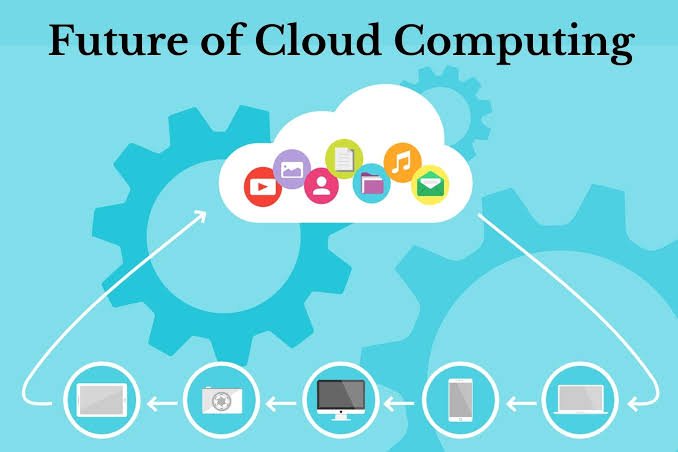
The cloud will increasingly become a distributed computing ecosystem rather than a single destination.
Challenges Facing Cloud Computing in 2030
The future of cloud computing will bring significant opportunities, but it will also create challenges.
The increasing demand for AI computing could put pressure on electricity grids and data-center infrastructure. Organizations will also need to deal with increasingly complex cybersecurity threats and privacy requirements.
Another challenge will be talent.
Companies will need professionals who understand cloud infrastructure, AI, cybersecurity, automation, data engineering, and distributed systems.
Cloud technology may become easier to use, but the underlying systems could become more sophisticated.
How Businesses Can Prepare for Cloud Computing in 2030
Businesses do not need to wait until 2030 to prepare.
They can begin by building a flexible cloud strategy today.
Companies should focus on:
- Developing cloud and AI skills
- Improving cybersecurity
- Establishing strong data governance
- Monitoring cloud costs
- Evaluating sustainability
- Preparing for hybrid and multicloud environments
- Exploring automation
- Understanding edge computing
- Building cloud-native applications where appropriate
The goal should not be to adopt every new technology.
Instead, businesses should identify the technologies that can genuinely improve their operations and customer experience.
Final Thoughts
Cloud computing in 2030 is likely to be more intelligent, distributed, automated, and specialized than it is today.
Artificial intelligence will be at the heart of many cloud services, while AI agents, edge computing, serverless architecture, multicloud environments, industry-specific platforms, and intelligent cybersecurity will reshape how organizations use technology.
At the same time, sustainability and digital sovereignty will become increasingly important as businesses and governments consider the environmental and strategic implications of cloud infrastructure.
The biggest change may be that users will no longer think about the cloud as a separate technology. Computing will increasingly happen seamlessly across cloud data centers, edge infrastructure, private systems, and connected devices.
One thing is already clear: the future of cloud computing will not simply be about storing data or running applications remotely. It will be about creating an intelligent, connected, and highly adaptive computing ecosystem.
For businesses and technology professionals, understanding these trends today can provide a significant advantage as we move toward 2030.