
The banking industry has always depended on technology. From ATMs and online banking to mobile applications and digital payments, technology has changed how financial institutions serve their customers.
Today, another technology is transforming the banking sector: cloud computing.
Cloud computing allows banks and financial institutions to access computing power, storage, databases, software, analytics, and other IT resources through flexible cloud infrastructure. Instead of relying entirely on traditional on-premises data centers, banks can use a combination of public, private, hybrid, and specialized cloud environments.
The adoption of cloud technology is becoming increasingly important as banks face growing customer expectations, rising data volumes, cybersecurity threats, and pressure to innovate quickly.
According to IBM research, financial services organizations are increasingly exploring hybrid cloud strategies to balance innovation, security, regulatory requirements, and operational needs. (ibm.com)
So, what exactly is the role of cloud computing in the banking industry?
In this article, we explore how banks use cloud technology, its major benefits, challenges, applications, security considerations, and what the future of cloud banking could look like.
What Is Cloud Computing in Banking?
Cloud computing in banking means using cloud-based infrastructure and services to support banking operations, applications, data, analytics, and digital services.
Traditional banks often operated large physical data centers containing servers and networking equipment. While these systems remain important, cloud technology provides another way to access computing resources.
Banks can use cloud services for:
- Customer relationship management
- Data analytics
- Artificial intelligence
- Fraud detection
- Mobile banking applications
- Document management
- Software development
- Backup and disaster recovery
- Cybersecurity
- Digital banking services
Cloud technology does not necessarily mean that a bank moves every system to a public cloud.
In practice, many financial institutions use hybrid cloud environments, combining private infrastructure with public cloud services.
This approach can give banks greater flexibility while allowing them to maintain control over sensitive workloads.
Why Are Banks Moving to the Cloud?
The banking industry is undergoing rapid digital transformation.
Customers expect banking services to be available through smartphones and online platforms at any time. They also expect applications to be fast, convenient, and personalized.
At the same time, banks generate enormous amounts of data.
Cloud computing can help financial institutions process this data, develop new applications, and scale digital services more efficiently.
Another important factor is innovation.
Traditional banking infrastructure can be difficult to change quickly. Cloud-based technologies can give development teams access to computing resources and software services more rapidly.
This can help banks experiment with new products and services without always having to make large investments in physical infrastructure.
1. Cloud Computing Improves Banking Scalability
One of the most important advantages of cloud computing is scalability.
Banking workloads can change significantly depending on customer activity.
For example, a bank may experience increased demand during salary-payment periods, tax deadlines, major economic events, or promotional campaigns.
Cloud infrastructure can allow organizations to increase computing capacity when demand rises and reduce it when demand falls.
This flexibility can help banks support growing numbers of customers without constantly expanding physical infrastructure.
2. Cloud Technology Supports Digital Banking
Modern customers increasingly use digital banking services instead of visiting physical branches.
Mobile banking applications allow customers to:
- Check account balances
- Transfer money
- Pay bills
- Deposit checks
- Apply for financial products
- Receive notifications
- Manage cards
Cloud computing can provide infrastructure for many of these digital services.
Because cloud platforms can scale and support distributed applications, they can help banks deliver services to large numbers of customers.
The cloud therefore plays an important role in the transition from traditional branch-based banking toward digital-first financial services.
3. Cloud Computing Enables Better Data Analytics
Banks generate enormous quantities of information every day.
This includes transaction data, customer interactions, payment activity, application data, and operational information.
Cloud platforms can provide scalable infrastructure for storing and analyzing this information.
Banks can use analytics to understand:
- Customer behavior
- Transaction patterns
- Product performance
- Financial risks
- Operational efficiency
- Customer preferences
Advanced analytics can help financial institutions make faster and more informed decisions.
For example, a bank could analyze customer activity to identify opportunities for personalized financial products.
4. Artificial Intelligence and Machine Learning
Artificial intelligence is becoming an increasingly important part of modern banking.
Cloud infrastructure provides the computing power needed to develop and deploy many AI and machine learning applications.
Banks can use AI for:
- Fraud detection
- Credit risk analysis
- Customer service
- Personalized recommendations
- Document processing
- Financial forecasting
- Anti-money-laundering monitoring
Machine learning systems can analyze large volumes of transactions and identify unusual patterns.
For example, if a customer’s account suddenly displays behavior that differs significantly from their historical activity, an AI-powered fraud detection system may flag the transaction for additional review.
As AI models become more sophisticated, cloud infrastructure will become increasingly important for financial institutions.
5. Improved Fraud Detection
Fraud is a major concern for banks.
Traditional fraud detection systems often rely on predefined rules. While these rules remain useful, modern banking generates too much data for manual analysis alone.
Cloud-based analytics and machine learning can help banks analyze transactions at scale.
AI systems can look for unusual patterns across large datasets and potentially identify suspicious activity faster.
This can help banks respond to fraud while minimizing disruption to legitimate customers.
However, financial institutions must carefully test and monitor automated systems to reduce false positives and ensure that decisions are explainable and appropriately governed.
6. Cloud Computing Can Reduce Infrastructure Costs
Maintaining physical IT infrastructure can be expensive.
Banks traditionally need to invest in servers, storage systems, networking equipment, data-center facilities, maintenance, and specialized personnel.
Cloud computing provides an alternative model.
Financial institutions can access computing resources without necessarily owning all of the underlying physical infrastructure.
This can help shift certain expenses from large upfront infrastructure investments toward consumption-based or subscription-based models.
However, cloud adoption does not automatically reduce costs.
Large banking workloads can become expensive if cloud resources are poorly managed. Financial institutions therefore need strong cost-management and FinOps practices.
7. Better Disaster Recovery and Business Continuity
Banks cannot afford long service interruptions.
Customers need access to their accounts and financial services even when technical problems occur.
Cloud infrastructure can support disaster recovery strategies by allowing data and applications to be replicated across separate environments.
If one system becomes unavailable, another environment may be able to support critical operations.
A strong disaster recovery strategy should include:
- Data backups
- Redundant infrastructure
- Recovery procedures
- Regular testing
- Monitoring
- Clearly defined recovery objectives
Cloud technology can strengthen business continuity, but banks still need comprehensive recovery plans and regular testing.
8. Cloud Security in Banking
Security is arguably the most important consideration when banks adopt cloud computing.
Financial institutions manage highly sensitive information, making them attractive targets for cybercriminals.
Cloud providers typically invest heavily in security infrastructure, but banks remain responsible for securing many aspects of their own cloud environments.
Important security measures include:
- Multi-factor authentication
- Encryption
- Identity and access management
- Network security
- Continuous monitoring
- Vulnerability management
- Secure APIs
- Data-loss prevention
- Employee security training
Banks also need strong governance processes to ensure that employees and applications only have access to the information they actually need.
9. Regulatory Compliance
Banks operate in heavily regulated environments.
They must comply with financial regulations, privacy requirements, cybersecurity rules, data-management standards, and other legal obligations.
Moving workloads to the cloud does not remove these responsibilities.
In fact, cloud adoption can introduce additional governance considerations.
Banks need to understand where data is stored, how it is processed, who can access it, and how cloud providers manage their infrastructure.
Cloud providers increasingly offer tools designed to help organizations meet regulatory and security requirements, but financial institutions remain responsible for ensuring their own compliance.
10. Faster Development of Banking Applications
Cloud computing can accelerate software development.
Developers can provision computing environments more quickly, test applications, and deploy new services without waiting for physical infrastructure to be installed.
This can help banks release new digital products faster.
For example, a financial institution could develop and test a new mobile banking feature using cloud infrastructure before deploying it to customers.
Cloud-native development practices can also make applications easier to scale and update.
This is particularly important as fintech companies introduce new digital financial services at a rapid pace.
11. Personalized Banking Experiences
Customers increasingly expect financial services to be personalized.
Instead of offering identical products to every customer, banks can use data analytics and AI to understand individual needs.
Cloud platforms can support the large-scale data processing required for personalized experiences.
For example, a bank could analyze a customer’s financial behavior and provide relevant savings suggestions or product recommendations.
Personalization must be handled carefully, particularly when sensitive financial information is involved. Banks need strong privacy and governance practices to ensure that customer data is used responsibly.
12. Supporting Fintech Partnerships
Cloud computing has also changed the relationship between traditional banks and fintech companies.
Financial technology startups can use cloud infrastructure to build and launch services without investing in large physical data centers.
Banks can partner with fintech companies to access new technologies and customer experiences.
APIs and cloud-based platforms can make it easier for financial organizations to connect different applications and services.
This can encourage innovation throughout the financial ecosystem.
Public Cloud vs. Private Cloud vs. Hybrid Cloud in Banking
Banks have several cloud deployment options.
Public Cloud
Public cloud infrastructure is operated by a third-party cloud provider and shared among multiple customers.
It can provide scalability and access to advanced services, including AI and analytics.
Private Cloud
Private cloud infrastructure is dedicated to a single organization.
Banks may choose private environments when they require greater control over infrastructure, data, or security.
Hybrid Cloud
Hybrid cloud combines private infrastructure with public cloud resources.
This model is particularly attractive to financial institutions because it allows them to maintain certain sensitive workloads in controlled environments while using public cloud services for applications that benefit from scalability and flexibility.
Many large banks therefore pursue hybrid strategies rather than choosing a single cloud model for everything.
Challenges of Cloud Computing in Banking
Despite its advantages, cloud computing presents several challenges.
Data Privacy
Banks must protect sensitive customer and financial information.
Cybersecurity
Cloud environments introduce additional systems, APIs, identities, and configurations that need to be secured.
Compliance
Financial institutions must ensure that cloud operations meet applicable regulatory requirements.
Vendor Lock-In
Depending heavily on a single provider can make migration more difficult.
Operational Complexity
Managing hybrid and multicloud environments can require specialized technical expertise.
Cost Management
Cloud spending can increase quickly when workloads are not monitored and optimized.
The Future of Cloud Computing in Banking
The future of cloud banking will likely involve even deeper integration between cloud computing, artificial intelligence, automation, cybersecurity, and data analytics.
AI-powered banking applications may become more common, while cloud infrastructure will increasingly support real-time financial analysis and automated services.
Banks may also use more sophisticated hybrid and multicloud strategies to balance flexibility, security, compliance, and cost.
Another important trend will be the growth of cloud-native banking platforms.
Rather than simply moving old applications into cloud environments, financial institutions are increasingly considering how applications can be redesigned specifically for modern cloud infrastructure.
Final Thoughts
The role of cloud computing in the banking industry is expanding rapidly.
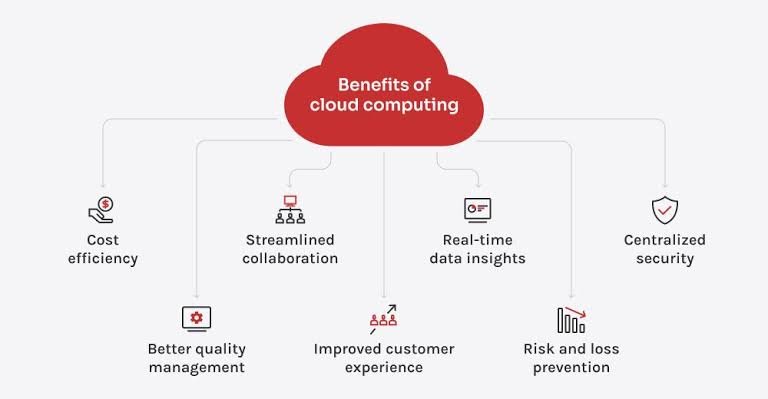
Cloud technology can help financial institutions scale digital services, analyze enormous amounts of data, improve disaster recovery, support artificial intelligence, accelerate software development, and deliver more personalized customer experiences.
However, banking is different from many other industries because security, privacy, compliance, and reliability are essential.
For this reason, successful cloud adoption requires more than simply moving applications to a cloud provider. Banks need a clear strategy that combines technology with strong governance, cybersecurity, risk management, and regulatory compliance.
As digital banking continues to grow, cloud computing will remain a critical part of the industry’s technological foundation. The banks that use cloud technology strategically—while maintaining strong security and customer trust—will be better positioned to innovate and compete in the future.