
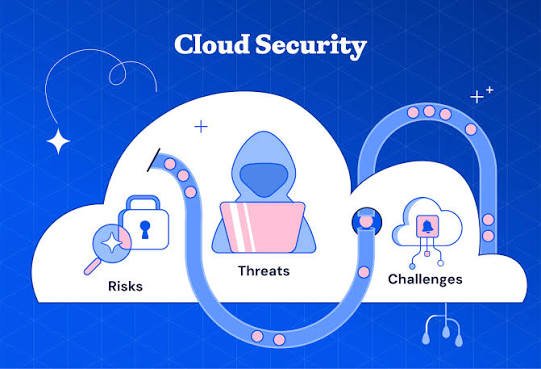
Cloud computing has changed the way organizations store data, operate applications, and manage their IT infrastructure. Businesses can now access powerful computing resources without maintaining large physical data centers, making technology more flexible, scalable, and accessible.
However, the rapid adoption of cloud technology has also created new security challenges.
Moving data and applications to the cloud does not automatically make them secure. Organizations still need to protect accounts, applications, networks, databases, and sensitive information from unauthorized access and cyber threats.
Cloud security can be particularly challenging because modern environments may contain thousands of resources, multiple users, automated services, third-party applications, and constantly changing configurations.
For businesses, understanding these challenges is the first step toward building a stronger security strategy.
In this article, we’ll explore the common cloud computing security challenges, why they happen, and practical ways organizations can reduce their risks.
What Is Cloud Computing Security?
Cloud computing security refers to the technologies, policies, processes, and practices used to protect cloud-based systems and information.
It involves protecting:
- Cloud infrastructure
- Applications
- Databases
- Storage
- User accounts
- Networks
- APIs
- Business data
- Cloud workloads
Cloud security covers several areas, including identity management, access control, encryption, monitoring, vulnerability management, compliance, and incident response.
The goal is to ensure that authorized users can access the resources they need while unauthorized individuals cannot.
Why Is Cloud Security Important?
Businesses increasingly depend on cloud platforms for critical operations.
A security incident can expose sensitive information, interrupt services, create financial losses, and damage customer trust.
Cloud security is also important because cloud environments can scale very quickly.
A company might create hundreds of resources in a short period.
Without proper security controls and visibility, some of those resources may be configured incorrectly or forgotten.
A strong security strategy helps organizations identify vulnerabilities before attackers can exploit them.
1. Data Breaches
Data breaches are among the most serious cloud security concerns.
Organizations may store sensitive information in cloud environments, including customer records, financial information, intellectual property, credentials, and internal documents.
If attackers gain unauthorized access, they may steal, modify, or destroy this information.
How to Reduce the Risk
Businesses should use multiple security layers.
Important measures include:
- Encryption
- Multi-factor authentication
- Least-privilege access
- Security monitoring
- Vulnerability management
- Data classification
- Regular security assessments
Sensitive information should only be accessible to authorized users and applications.
2. Misconfigured Cloud Resources
Cloud misconfiguration is a major security challenge.
Cloud platforms provide many configuration options, but a simple mistake can unintentionally expose resources.
Examples include:
- Publicly accessible storage
- Overly permissive firewall rules
- Excessive user permissions
- Exposed credentials
- Incorrect network configurations
How to Reduce the Risk
Organizations should establish secure configuration standards.
They can also use:
- Automated configuration scanning
- Infrastructure as Code
- Security policies
- Continuous monitoring
- Regular audits
Automation can help identify misconfigurations faster than manual reviews alone.
3. Weak Identity and Access Management
Identity and access management is central to cloud security.
Users, administrators, applications, APIs, and automated services all need access to cloud resources.
If access controls are too permissive, attackers who compromise an account may gain access to far more information than necessary.
How to Reduce the Risk
Organizations should:
- Enable multi-factor authentication
- Apply least privilege
- Use role-based access controls
- Review permissions regularly
- Remove inactive accounts
- Protect privileged accounts
- Monitor login activity
Never give users administrative privileges simply because they’re convenient.
Permissions should match job responsibilities.
4. Account Hijacking
Attackers may attempt to steal cloud account credentials through phishing, malware, password reuse, or other techniques.
Once an attacker obtains valid credentials, they may be able to access cloud resources without immediately triggering traditional security controls.
How to Reduce the Risk
Organizations should implement:
- Multi-factor authentication
- Strong authentication policies
- Login monitoring
- Conditional access controls
- Credential protection
- Security awareness training
Users should also understand how to recognize suspicious emails and login requests.
5. Insecure APIs
APIs are fundamental to cloud computing.
Applications use APIs to communicate with cloud services, databases, authentication systems, and other applications.
Poorly secured APIs can become an entry point for attackers.
Common API security problems include:
- Weak authentication
- Poor authorization
- Insufficient input validation
- Exposed credentials
- Lack of rate limiting
- Inadequate monitoring
How to Reduce the Risk
Organizations should secure APIs using strong authentication and authorization mechanisms.
They should also validate inputs, protect credentials, encrypt communications, monitor API activity, and conduct regular security testing.
6. Insider Threats
Cloud security threats don’t always come from outside an organization.
Employees, contractors, or other authorized users can accidentally or deliberately cause security incidents.
An employee might accidentally share sensitive information or delete an important resource.
A malicious insider could intentionally misuse access.
How to Reduce the Risk
Use:
- Least-privilege permissions
- Access reviews
- Activity logging
- Separation of duties
- Security monitoring
- Employee training
Organizations should also establish clear policies for handling sensitive information.
7. Lack of Visibility
One of the biggest challenges in cloud security is knowing exactly what is happening inside an environment.
Cloud infrastructure can contain many resources, users, applications, accounts, and services.
Without centralized visibility, suspicious activity may go unnoticed.
How to Reduce the Risk
Organizations should implement appropriate monitoring and logging.
Monitor:
- User activity
- Authentication events
- Network traffic
- Application activity
- Configuration changes
- Resource creation
- Security alerts
Centralized logs can make investigations much easier.
8. Compliance Challenges
Many organizations must comply with laws, regulations, contracts, and industry standards.
Cloud environments can make compliance more complicated because data may be processed across different systems, regions, or service providers.
Organizations need to understand where information is stored and who can access it.
How to Reduce the Risk
Businesses should:
- Classify sensitive data
- Maintain access controls
- Keep appropriate audit logs
- Establish data retention policies
- Encrypt sensitive information
- Regularly assess compliance
- Document security procedures
Compliance requirements depend on the organization’s industry, location, customers, and type of data.
9. Data Loss and Inadequate Backups
Cyberattacks aren’t the only cause of data loss.
Information can also disappear because of accidental deletion, software problems, configuration errors, or other operational incidents.
Simply storing information in the cloud doesn’t guarantee that it can always be recovered.
How to Reduce the Risk
Create a reliable backup strategy.
Determine:
- What needs to be backed up
- How often backups should occur
- How long backups should be retained
- Who can access them
- How quickly systems must be restored
Test backups regularly to confirm that recovery actually works.
10. Malware and Ransomware
Cloud applications and storage systems can be targeted by malware and ransomware.
An attacker who gains access to an account or workload may attempt to encrypt, modify, or destroy information.
How to Reduce the Risk
Organizations should combine:
- Strong authentication
- Endpoint protection
- Network controls
- Backup strategies
- Access restrictions
- Security monitoring
- Employee training
Backups should be protected against unauthorized modification or deletion where appropriate.
11. Shared Responsibility Confusion
Cloud security operates under a shared responsibility model.
Cloud providers are responsible for securing the infrastructure they operate.
Customers remain responsible for many aspects of the security of their own workloads, configurations, identities, applications, and data.
The exact responsibilities depend on the service being used.
A common mistake is assuming that the cloud provider handles everything.
How to Reduce the Risk
Organizations should clearly document their security responsibilities.
Teams should understand which security controls are managed by the provider and which must be configured by the customer.
12. Third-Party and Supply Chain Risks
Cloud applications often depend on external software, APIs, libraries, services, and vendors.
A vulnerability in one of these dependencies can affect your own environment.
How to Reduce the Risk
Organizations should:
- Evaluate third-party providers
- Track software dependencies
- Keep components updated
- Monitor vendor security
- Restrict third-party access
- Review permissions regularly
Critical suppliers should also be included in business continuity and risk assessments.
13. Poor Cloud Security Configuration Management
Cloud environments change constantly.
New applications are deployed, users are added, permissions are modified, and infrastructure is updated.
A secure configuration today may become insecure tomorrow.
How to Reduce the Risk
Security should be integrated into the entire cloud lifecycle.
Organizations can use:
- Infrastructure as Code
- Automated security testing
- Configuration monitoring
- Change management
- Continuous compliance checks
Automation helps organizations identify configuration changes quickly.
14. Inadequate Security Skills
Technology alone cannot solve every security problem.
Organizations need people who understand cloud architecture, security controls, identity management, networking, monitoring, and incident response.
A lack of skilled professionals can make cloud environments harder to secure.
How to Reduce the Risk
Businesses can invest in:
- Employee training
- Security certifications
- Cloud security workshops
- Hands-on labs
- Internal security teams
- External security expertise
Continuous education is particularly important because cloud technologies evolve quickly.
15. Poor Incident Response
Even strong security systems cannot guarantee that an organization will never experience an incident.
When something goes wrong, response speed matters.
Without an incident response plan, teams may waste valuable time trying to determine what to do.
How to Reduce the Risk
Create and regularly test an incident response plan.
It should define:
- Who responds to incidents
- How incidents are reported
- How compromised accounts are contained
- How evidence is preserved
- How systems are recovered
- How customers or regulators are notified when necessary
Practice through simulations and exercises.
Best Practices for Cloud Security
Organizations can strengthen their cloud security posture by following several core practices:
- Use multi-factor authentication.
- Apply least-privilege access.
- Encrypt sensitive information.
- Monitor cloud activity.
- Review configurations regularly.
- Secure APIs.
- Maintain tested backups.
- Keep software updated.
- Segment sensitive workloads.
- Monitor privileged accounts.
- Train employees.
- Use automated security checks.
- Maintain an incident response plan.
- Regularly review third-party access.
Security works best as a layered system.
No single tool can protect an organization from every threat.
How Small Businesses Can Improve Cloud Security
Small businesses may not have large cybersecurity teams, but they can still implement important security measures.
Start with the basics.
Enable multi-factor authentication for important accounts.
Review user permissions and remove unnecessary access.
Back up important information.
Keep software updated.
Use strong passwords and password-management practices.
Set up security alerts.
Monitor cloud spending and resource changes.
Train employees to recognize phishing and other common threats.
These basic measures can significantly improve an organization’s security posture.
The Future of Cloud Security
Cloud security will continue to evolve as organizations adopt artificial intelligence, containers, serverless computing, edge technologies, and increasingly complex cloud architectures.
Automation will become even more important.
Security teams will increasingly rely on automated monitoring, threat detection, configuration analysis, and identity controls.
Artificial intelligence may also help security teams analyze large amounts of information and identify suspicious behavior more efficiently.
At the same time, attackers are likely to use increasingly sophisticated techniques.
Organizations will therefore need to combine technology, skilled professionals, security processes, and continuous monitoring.
Frequently Asked Questions
What is the biggest cloud computing security challenge?
There isn’t one universal challenge. Data breaches, misconfiguration, weak identity controls, insecure APIs, insider threats, and poor visibility can all create significant security risks.
How can cloud computing security be improved?
Start with strong identity management, multi-factor authentication, least privilege, encryption, monitoring, secure configurations, backups, employee training, and regular security assessments.
Is cloud computing secure for businesses?
Cloud computing can be secure when properly designed and managed. Security depends on both the cloud provider’s infrastructure and the customer’s configuration, applications, identities, and data protection practices.
What is the shared responsibility model?
It is a security model in which the cloud provider and customer have different responsibilities for protecting cloud environments. The exact division depends on the cloud service being used.
Do small businesses need cloud security?
Yes. Any organization storing data or running applications in the cloud should take security seriously, regardless of its size.
Final Thoughts
Cloud computing provides businesses with flexibility, scalability, and access to powerful technology, but it also introduces new security challenges.
The most common cloud computing security challenges include data breaches, misconfigured resources, weak access controls, account hijacking, insecure APIs, insider threats, compliance problems, data loss, malware, and poor visibility.
The solution isn’t to avoid cloud technology.
Instead, organizations should understand their risks and build security into every part of their cloud environment.
Strong identity management, least-privilege access, encryption, monitoring, secure configuration, tested backups, employee training, and effective incident response can significantly improve cloud security.
Most importantly, cloud security should be treated as an ongoing process.
As applications, users, technologies, and threats change, security strategies must change with them.
Organizations that combine the right technology with strong processes and skilled people will be better positioned to use cloud computing securely while protecting their data, applications, and customers.